
As a health and fitness writer, I’m no stranger to workout trends. Some stick around for good reason, while others burn bright on social media before quietly disappearing. Wall Pilates is one I’ve been seeing everywhere lately, usually framed as an accessible, do-at-home alternative to reformer Pilates, with bold claims about posture, core strength and sculpting results.
Naturally, I was curious. Could adding a wall really make that much difference? And would it be something I’d actually want to keep doing? To find out, I committed to practising wall Pilates every day for a week.
What is wall Pilates, exactly?
At its core, wall Pilates is exactly what it sounds like: traditional Pilates exercises performed with the support of a wall. Instead of relying solely on the floor or a reformer machine, you use the wall for stability, feedback and, in some cases, extra resistance.
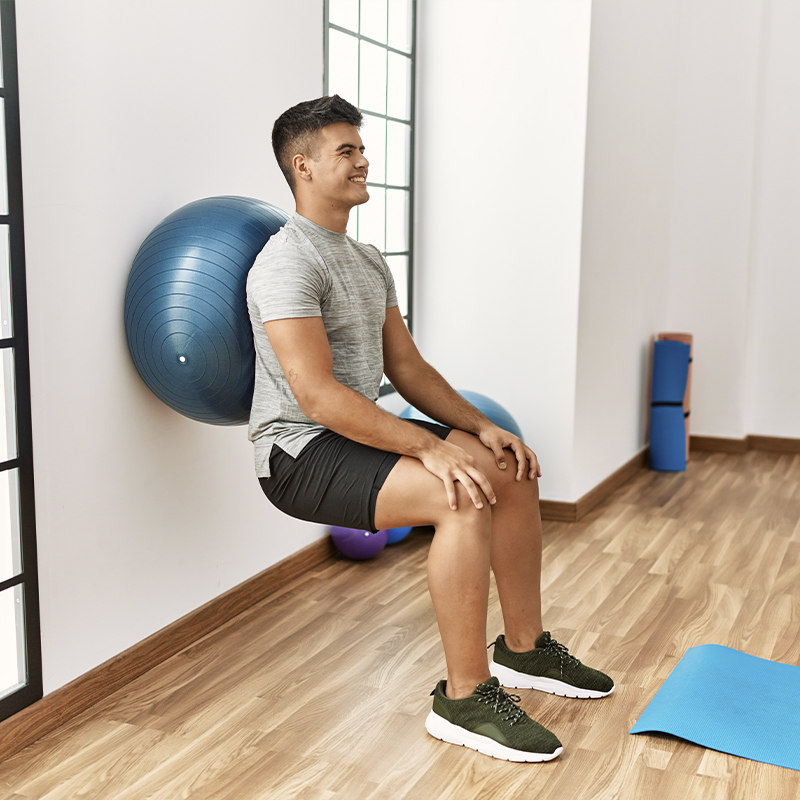
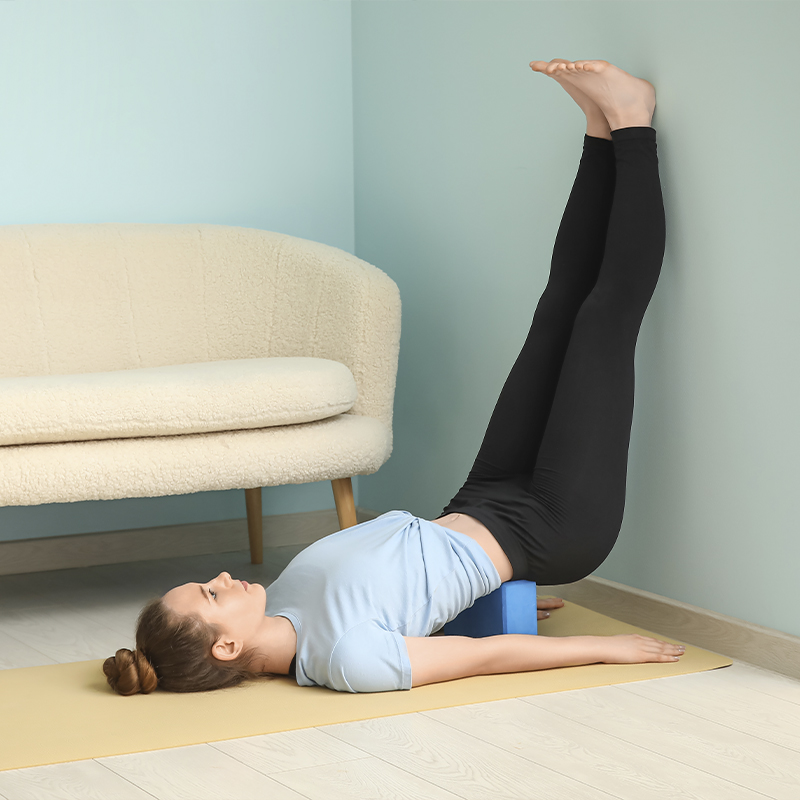
There’s no single, official wall Pilates routine. Exercises might include glute bridges with your feet pressed into the wall, abdominal work with your legs elevated, standing leg sequences using the wall for balance, or side-lying movements where the wall helps you stay aligned. Crucially, it requires very little equipment, just a mat, some clear wall space, and your body.
That simplicity is a big part of its appeal. It’s low-impact, joint-friendly, and easy to scale up or down depending on how you’re feeling that day.
Why does using a wall help?
One of the key reasons wall Pilates can feel surprisingly effective comes down to proprioception, which is your body’s ability to sense where it is in space.
When you’re exercising against a wall, you’re constantly receiving physical feedback. You can immediately feel if your hips are tilting or if one side of your body is working harder than the other. This awareness makes it easier to adjust your position and maintain good alignment, even without an instructor in the room.
The wall also encourages better core engagement. Pressing your feet, legs or back into a solid surface gives you something to work against, which can help switch on the deep core muscles that Pilates is known for targeting. For beginners, especially, it acts as a helpful middle ground; more supportive than free-standing mat work, but still challenging enough to build strength and control.
Why I decided to give it a go
I already do a mix of strength training, walking, and Pilates, but I’m always looking for ways to switch up my routine to keep things fresh. Wall Pilates appealed because it promised structure without pressure – something I could realistically fit into busy days without needing to psych myself up.
I decided to follow a beginner-friendly wall Pilates workout at home every day for seven days, keeping my sessions to around 20-30 minutes. In reality, that meant rolling out my mat in my spare room, taking a mirror off the wall to get the required space, and squeezing sessions in wherever they fitted – mostly evenings for me, but with a couple of lunchtime sessions thrown in. I liked that there was no fancy kit required, and no studio sessions to book (or be late for) – just a YouTube video playing on my laptop (occasionally balanced on a pile of books when I couldn’t see the screen properly).
My first impressions
On day one, I was struck by how deceptively simple it all looked. With slow leg lifts, controlled bridges, and gentle abdominal curls, it looked like a workout I'd be able to blast through with ease. But within minutes, my core was shaking in a very familiar Pilates way (if you know, you know!).
Using the wall made certain movements feel more supported, but not necessarily easier. In fact, some exercises felt harder because I couldn’t modify the movement as much. The wall highlighted tiny imbalances I wouldn’t normally notice, especially in my hips and glutes. During one exercise, I noticed immediately that my right hip wanted to creep upwards while my left leg stayed put – something that I’d never realised while doing mat Pilates.
I also loved the pace. Wall Pilates forces you to slow down, focus on your breathing, and pay attention to the small details of how you’re moving – a welcome contrast to more frantic workouts.
One tip – bare feet work much better than standard socks (which I learned after slowly sliding down the wall like melting ice cream on my first attempt), but gripper socks specifically designed for Pilates work the best. I ordered some for next-day delivery after my first session, and day two was much more successful.
What changed after a week?
After seven days, the changes were subtle but noticeable.
- My posture improved. I caught myself sitting and standing taller, particularly at my desk. Whether that was a physical change or simply increased awareness is hard to say, but in any case, both matter, so it was a welcome change.
- I felt more core connection. My deep core felt more ‘switched on’, especially during everyday movements like walking or lifting things.
- I felt less stiff overall. My hips and lower back felt looser, especially in the mornings.
- I enjoyed it. Perhaps the biggest win was that I actually looked forward to the sessions, which made them easy to fit into my routine.
That said, this wasn’t a dramatic transformation. Sadly, I didn’t suddenly develop visible abs overnight. Compared to reformer Pilates or weighted training, it’s gentler and less progressive, but as a complementary practice to use alongside other workout types, it really shines.
How it compares to other workouts
For me, wall Pilates sits in a sweet spot. It’s more engaging than stretching, less demanding than strength training, and more structured than free-form mobility work. I wouldn’t rely on it alone if my goal were building muscle or improving fitness markers, but as part of a balanced routine, it earns its place. It’s also ideal for days when energy is low, motivation is thin, or you just want to move without overthinking it.
That said, not every session felt amazing. A few days in, my hip flexors felt tired, and I had to swap a planned workout for a gentler video instead. However, that flexibility is part of what makes home workouts sustainable for me, as I can chop and change my plans without having to cancel a booked session.
How to try wall Pilates at home
If you’re curious to give it a go, here’s how to get started:
- Clear a section of wall, and lay your mat alongside it.
- Choose a beginner-friendly wall Pilates video (20 minutes is plenty).
- Practise barefoot or in grip socks for better stability.
- Move slowly and with control – momentum makes it easier, but less effective.
- Focus on your breath and core engagement rather than rushing through reps.
- Use the wall as feedback for alignment, not something to lean on heavily.
- If you want to add resistance, try ankle weights or resistance bands.
- Stop if anything feels painful rather than challenging.
- If you're new to working out or unsure of your ability to perform the movements correctly, seek an instructor to help you exercise safely.
My verdict
Wall Pilates isn’t a shortcut to dramatic physical changes, but it is a practical, low-pressure way to build core strength and improve body awareness. For me, it offered an accessible, fun way to move differently that complemented my other workouts, without completely replacing them.
If your usual workouts have felt uninspiring lately, or you’re looking for something to add variety, wall Pilates is well worth a try. It may not be the perfect workout for everyone, but for anyone curious about Pilates without the commitment of classes or equipment, it’s an easy entry point.